What Does Switzerland Export To The US? A Detailed Guide
Switzerland plays a vital role in U.S. trade, supplying a wide range of high-value and specialized products. From pharmaceuticals and


In the realm of international trade, adherence to Japan’s Advanced Filing Rules (AFR) is a critical aspect, demanding precision and efficiency in compliance. This blog explores the significance of Japan’s AFR filing, a regulatory framework aimed at fortifying security measures in the global supply chain.
Central to ensuring seamless compliance with Japan AFR is Artemus’ advanced filing software meticulously designed for businesses. Recognized for its intuitive interface and robust features, Artemus plays a pivotal role in streamlining the intricate process of AFR submission, ensuring accurate, timely, and secure electronic filing of crucial cargo information before departure.
Join us as we delve into the crucial role of Japan AFR filing and how Artemus stands as an indispensable tool for businesses navigating the ever-evolving landscape of international trade compliance.
Table Of Contents
Japan’s Advanced Filing Rules (AFR) are customs requirements designed to strengthen trade security and improve supply chain efficiency. Enforced by Japan Customs, the AFR system requires ocean carriers and non-vessel operating common carriers (NVOCCs) to electronically submit key cargo information at least 24 hours before loading at the port of departure.
This proactive approach helps streamline customs clearance and enhances cargo risk assessment before arrival at Japanese ports.
The filing includes detailed information such as shipper details, consignee information, notify party, and accurate cargo descriptions, with HS codes encouraged for clarity. By receiving this data in advance, Japan Customs can evaluate risks, allocate resources effectively, and address potential issues before cargo reaches Japan.
The core objective of Japan AFR is to minimize delays, improve data accuracy, and enhance the overall efficiency of the import process. By leveraging electronic data interchange (EDI), AFR ensures that filing is not only swift but also accurate, mitigating the common errors associated with manual paperwork.
Compliance with AFR is mandatory for all containerized cargo bound for Japan. Carriers and NVOCCs must adopt digital solutions to ensure timely and accurate filings, supporting both security and efficiency in international trade.
Related: How To Find HTS Code? Harmonized Tariff Schedule

The responsibility to file Ocean Advanced Filing Rules (AFR) rests with ocean carriers and non-vessel operating common carriers (NVOCCs) handling containerized cargo bound for Japan. These parties must electronically submit detailed cargo information to Japan Customs no later than 24 hours before the cargo is loaded on the vessel at the port of origin.
This requirement allows customs authorities to perform advance risk assessments, strengthen border security, and streamline the clearance process before cargo arrives in Japan. While carriers and NVOCCs are directly responsible for filing, they often depend on accurate data provided by shippers, importers, and freight forwarders. This collaboration ensures that filings are both timely and compliant.
Failure to comply with AFR regulations can result in penalties or restrictions, including cargo not being permitted to load. For this reason, clear communication and accurate documentation across the supply chain are essential to maintaining compliance and avoiding costly delays.
Related: HS Code VS HTS Code: 10 Differences You Need To Know
Japan’s Advanced Filing Rules (AFR) place a significant emphasis on the proactive submission of detailed information to ensure a smoother customs clearance process.
Importers, carriers, and NVOCCs engaging in international trade with Japan must be well-versed in the specific details required for AFR submission to comply with regulations and prevent delays.
The key information mandated for Japan AFR submission includes comprehensive details about the cargo, its origin, and the parties involved in the shipment.
The shipper’s full legal name, complete address (including country code and postal code), and telephone number must be provided. This information identifies the party responsible for sending the goods.
Errors or omissions in shipper details often result in re-filing requests, so accuracy is critical. Customs uses shipper details to trace shipments back to their point of origin, making this a vital part of global supply chain security.
The consignee is the party receiving the cargo in Japan. Customs requires the consignee’s name, full address, and contact number. This ensures Japanese authorities can confirm the legitimacy of the importer and issue any necessary notifications.
Inaccurate consignee information is one of the most common causes of clearance delays, so double-checking this data can save time and money.
If a notify party is designated, such as a freight forwarder or customs broker, their details must be included. The notify party’s information (name, address, and phone number) ensures faster communication if customs needs clarification or additional data.
Having a reliable notify party on file also helps cargo move more smoothly since they can quickly respond to customs inquiries without waiting for the consignee.
The booking party is typically the entity that reserved space with the carrier , often a freight forwarder or NVOCC. Providing this information helps customs trace responsibility for the shipment if discrepancies are found.
In practice, including the booking party also helps avoid confusion when multiple intermediaries are involved in moving goods across borders.
A complete and accurate description of the goods is required. This should include the nature of the cargo, quantity, gross weight, and commercial description. At least the first six digits of the Harmonized System (HS) code must be included to allow customs to classify the goods correctly and assess any risks.
A vague description like “machinery” can trigger inspection, while a detailed one like “hydraulic pumps, HS 8413.60” reduces the chance of delays.
The cargo movement type, FCL (Full Container Load), LCL (Less than Container Load), or Breakbulk, must be indicated. This classification allows customs to determine how the shipment will be handled at the port and whether extra checks are needed.
It also impacts costs, handling processes, and who is responsible for ensuring filing accuracy, so getting this right benefits all parties in the chain.
Carriers must submit the vessel name, voyage number, scheduled departure time from the port of loading, and the estimated time of arrival in Japan. These details allow customs to link the shipment with vessel schedules and plan inspection resources efficiently.
This information is also used to track vessels globally and identify patterns that may signal potential security risks.
Each container’s number, container type, and seal number must be provided, along with the number of packages, package type, gross weight, and volume (CBM). This information is used to verify that the declared cargo matches the physical shipment arriving in Japan.
For companies, accurate container and seal details not only meet customs rules but also serve as proof of cargo integrity during transit.
Both the loading port and the discharge port in Japan must be specified. Customs requires precise port codes (including suffixes used in the NACCS system) to track trade routes and identify potential risk areas.
Incorrect port details may result in rejections or clearance delays, so understanding how these codes work is essential for logistics teams handling multiple shipping routes.
The Master Bill of Lading (MB/L) and House Bill of Lading (HB/L) numbers must be entered. Japan Customs uses these numbers to link AFR filings with manifest data. Without proper linkage between master and house B/Ls, shipments can be flagged for additional checks, delaying release.
The Bill of Lading functions much like a tracking number in international shipping, connecting every stage of the cargo’s movement.
If the cargo is classified as hazardous, details such as the IMO class, UN number, and appropriate hazard labels must be included. This ensures compliance with international safety regulations and helps port authorities prepare for safe handling.
Including this information not only prevents regulatory penalties but also protects port workers and ensures cargo is stowed correctly on the vessel.
Related: Customs Compliance Software: Key Benefits & Top Suggestions
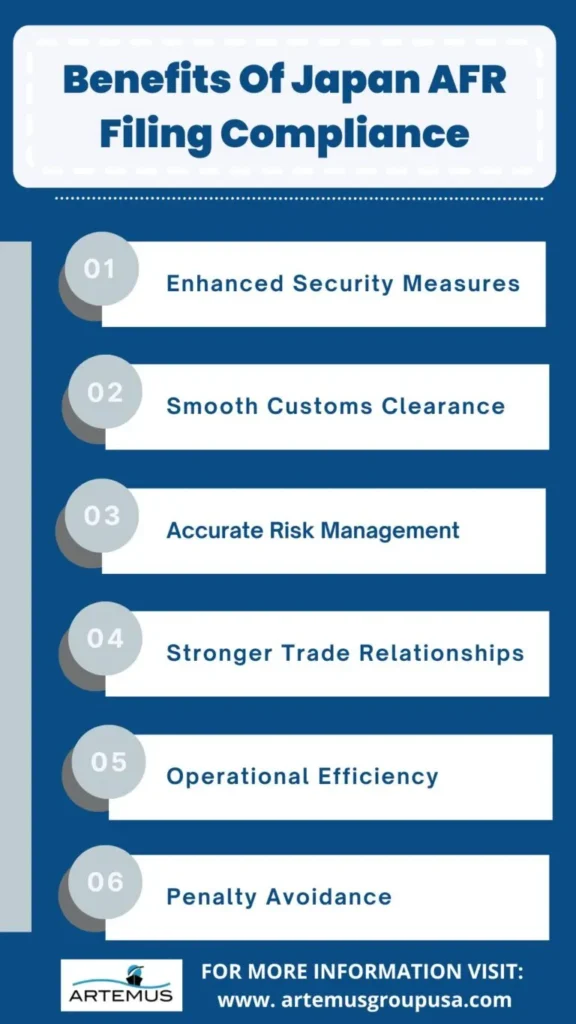
Embracing compliance with Advanced Filing Rules (AFR) is a strategic step that not only aligns businesses with Japan Customs’ requirements but also delivers practical benefits that improve security, reduce delays, and strengthen supply chain performance. Here are some of the key advantages businesses gain by staying compliant:
AFR compliance significantly enhances security by requiring carriers and NVOCCs to provide key cargo information before departure. This advance filing gives customs authorities the ability to screen shipments, detect anomalies, and implement necessary security checks. By identifying risks early, AFR helps protect both Japanese ports and the wider global supply chain.
Submitting cargo information in advance allows customs officials to review shipments before arrival, which minimizes congestion and shortens clearance times at Japanese ports. This proactive process reduces the risk of delays and keeps cargo moving on schedule. Faster clearance not only saves time but also helps businesses reduce demurrage, storage charges, and other avoidable costs.
With detailed data on shippers, consignees, cargo descriptions, and voyage information, authorities can conduct more precise risk assessments. This advance screening makes it possible to flag high-risk shipments for further review while allowing compliant shipments to pass more quickly. The result is a more secure and resilient trade environment for all stakeholders.
Compliance with AFR builds trust with Japan Customs and reinforces a company’s reputation as a reliable trading partner. By consistently following regulations, businesses reduce the likelihood of disruptions and demonstrate commitment to international security practices. This reliability can support smoother collaboration with Japanese importers, forwarders, and logistics providers.
Accurate and timely submissions improve coordination across the logistics chain. Carriers and forwarders can plan vessel space, port operations, and inland transportation more effectively when AFR filings are done correctly. This reduces last-minute disruptions, cuts down on administrative workload, and helps companies maintain a more predictable and cost-efficient supply chain.
A direct benefit of AFR compliance is avoiding penalties or shipment holds. Failure to file, late submissions, or inaccurate information can lead to fines, refusal of cargo loading at origin, or delays upon arrival. Staying compliant eliminates these risks, protecting businesses from costly disruptions and reputational damage.
Related: Where Can I Buy A Customs Bond? Understand Your Options
Japan Customs introduced the Advanced Filing Rules (AFR) for maritime cargo on March 1, 2014, as part of its initiative to strengthen border security and modernize trade compliance. The framework was designed to align Japan’s customs procedures with international standards, ensuring that all inbound cargo can be screened prior to arrival.
The primary objective of AFR is to allow customs authorities to receive and assess maritime container cargo information in advance. By mandating carriers and NVOCCs to file shipment data beforehand, Japan Customs can better identify high-risk consignments and take preventive measures. This system plays a vital role in counterterrorism efforts, preventing transnational organized crime, and minimizing supply chain vulnerabilities.
Beyond security, AFR also enhances the efficiency of trade flows. With early access to cargo data, authorities can plan inspections more effectively, which reduces port congestion and prevents delays for compliant shipments. In this way, AFR strengthens both national security and the competitiveness of Japan’s maritime logistics sector.
Related: NVOCC License Requirements: What You Need To Know
Comparing Japan’s Advanced Filing Rules (AFR) with traditional customs filing methods provides insights into the distinctive features that set them apart. Here are five detailed points highlighting the differences between Japan’s AFR and traditional customs filing:
Related: ISF 5: Meaning, Compliance Requirements, & Best Practices
In the dynamic landscape of international trade, compliance with Japan’s Advanced Filing Rules (AFR) is paramount for smooth customs clearance and efficient supply chain operations.
Recognizing the evolving needs of businesses engaged in global trade, Artemus takes a bold step forward by offering cutting-edge Japan AFR Filing Software. This software solution is meticulously designed to streamline the AFR submission process, ensuring accuracy, timeliness, and adherence to regulatory requirements.
Related: ISF Filing: A Compliance-Related Guide & Software Solution
The responsibility for AFR filing lies with the party responsible for the cargo, often the shipper or an authorized representative such as a freight forwarder or NVOCC.
The security filing for cargo destined for Japan is known as Advanced Filing Rules (AFR), a regulatory framework requiring the electronic submission of essential cargo information before departure.
Shipping methods in Japan include ocean freight, air freight, and domestic land transport for comprehensive logistics solutions.
AFR in Japan stands for Advanced Filing Rules, a system requiring advance cargo information submission to Japan Customs.
AFR filing must be submitted at least 24 hours before the vessel is loaded at the port of origin. This early submission allows Japan Customs to review cargo details in advance.
Late or incomplete AFR filings can lead to cargo being held, refused loading, or delayed upon arrival in Japan. It may also increase inspection rates, causing further disruptions.
Yes, non-compliance can result in fines, refusal of loading, and additional costs for the carrier or NVOCC. Repeated violations may also affect future shipping operations and reliability.
Japan AFR filings are made electronically through the Nippon Automated Cargo and Port Consolidated System (NACCS). This platform ensures data is securely transmitted to Japan Customs for risk assessment.
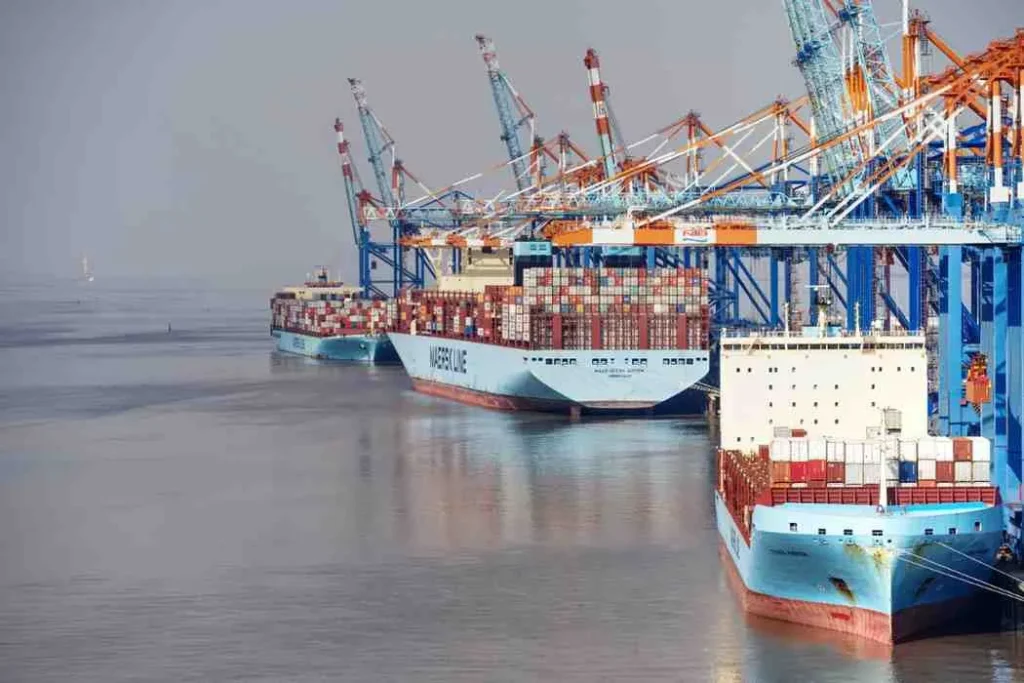
In conclusion, Japan’s Advanced Filing Rules (AFR) are integral to securing and streamlining global trade. Mandating pre-departure electronic cargo information submission, AFR reflects Japan’s commitment to a secure and efficient international supply chain.
Utilizing software like Artemus is essential for businesses, ensuring a seamless and technologically advanced approach to AFR compliance. In the dynamic landscape of supply chain security, Japan’s AFR filing remains a cornerstone for fostering resilience and regulatory precision in the movement of goods.
Related: Customs Broker VS Freight Forwarder: 5 Key Differences

Switzerland plays a vital role in U.S. trade, supplying a wide range of high-value and specialized products. From pharmaceuticals and
In 2026, the US-Europe trade relationship continues to power global commerce, driven by exports of energy, advanced machinery, and pharmaceuticals
The economic partnership between the United States and Norway is a sophisticated and evolving pillar of transatlantic commerce. U.S. exports