
What Does The US Export To Switzerland? Trade Insights
International trade between the United States and Switzerland highlights the strong economic relationship between the two nations. With its highly



Shipping ports serve as the beating heart of global trade, connecting countries, industries, and economies through the seamless movement of goods across oceans. From towering cranes to sprawling container terminals, the largest shipping ports in the world are marvels of modern engineering and logistics.
These mega-ports handle millions of containers annually, facilitating the global supply chain that powers our daily lives. Ports like Shanghai, Singapore, and Ningbo-Zhoushan not only lead in scale and efficiency but also set benchmarks for innovation in maritime operations.
Managing the movement of goods through these global ports requires seamless coordination and compliance with international trade regulations. This is where Artemus steps in. Offering reliable solutions for ISF, AMS, and AES, we help businesses streamline their import and export processes while ensuring full compliance with U.S. Customs and Border Protection (CBP) requirements.
Table Of Contents
When it comes to global maritime trade, China leads the world with the largest and busiest shipping ports. Over the past few decades, China has heavily invested in port infrastructure, transforming its coastline into a network of mega-ports that dominate global container traffic.
Major Chinese ports such as Port of Shanghai, Port of Ningbo-Zhoushan, Port of Shenzhen, and Port of Guangzhou consistently rank among the top container ports worldwide. These ports handle tens of millions of TEUs annually and play a vital role in supporting China’s position as one of the world’s largest manufacturing and export economies.
China’s dominance in global shipping is driven by its large-scale manufacturing base, strategic coastal location, and continuous investment in port automation, logistics infrastructure, and international trade routes. As a result, the country hosts more of the world’s busiest ports than any other nation, making it a central hub for global supply chains.
While China leads in terms of scale and volume, several other countries operate highly influential ports that play critical roles in international trade:
1. Netherlands – The Port of Rotterdam is Europe’s largest seaport and serves as the main entry point for goods entering the European Union. Its advanced automation, deep-water terminals, and extensive rail and inland waterway connections make it one of the most efficient ports in the world.
More info: https://www.portofrotterdam.com
2. Singapore – The Port of Singapore is one of the largest transshipment hubs in the world, connecting major shipping routes across Asia, Europe, the Middle East, and the Americas. In 2025, it set a new record of about 44.66 million TEUs, making it the second busiest container port globally.
More info: https://www.mpa.gov.sg
3. South Korea – The Port of Busan is Northeast Asia’s largest logistics gateway and ranks among the top container ports globally. It handles more than 22–24 million TEUs annually, supporting South Korea’s export-driven economy and regional supply chains.
More info: https://www.busanpa.com
4. United Arab Emirates – The Port of Jebel Ali in Dubai is the largest port in the Middle East and a major global logistics hub linking Asia, Europe, and Africa. It supports a network of more than 150 shipping routes, connecting over 140 ports worldwide, and plays a crucial role in regional trade, transshipment, and re-export operations.
More info: https://www.dpworld.com
Related: Understanding Roll-On/Roll-Off Ships: A Complete Guide

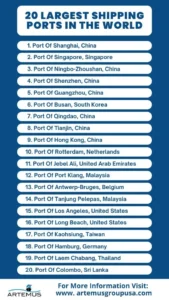
The global maritime industry is pivotal to international trade, with container ports serving as critical hubs for the movement of goods. These ports are ranked based on their container throughput, measured in twenty-foot equivalent units (TEUs).
Below is an elaborative overview of the 20 largest shipping ports in the world, highlighting their key features, capacities, and strategic importance.
The Port of Shanghai has maintained its position as the world’s busiest container port since 2010. Strategically located at the Yangtze River Delta, it serves as a vital gateway for trade between China and global markets.
Over the years, the port has continued to expand its infrastructure and technological capabilities, enabling it to handle some of the largest container vessels in operation today.
With highly automated terminals and strong connectivity to inland transportation networks, the port plays a crucial role in supporting international trade and global supply chains.
Throughput: Over 49 million TEUs (recent years)
Key Features:
Significance:
Source: https://en.wikipedia.org/wiki/Port_of_Shanghai
The Port of Singapore is one of the world’s most important maritime hubs and a leading global transshipment center. Positioned along one of the busiest shipping routes in the world, it connects trade flows between Asia, Europe, the Middle East, and the Americas.
Known for its efficiency and advanced logistics systems, the port handles a massive volume of container traffic annually and supports Singapore’s role as a global trading powerhouse.
Throughput: Approximately 39 million TEUs (recent years)
Key Features:
Significance:
Source: https://www.mpa.gov.sg
The Port of Ningbo-Zhoushan is one of the world’s largest ports by both cargo volume and container throughput. Formed through the merger of the Ningbo and Zhoushan ports in 2006, it has rapidly grown into a major maritime gateway in eastern China.
Its deep-water berths and advanced infrastructure allow it to accommodate ultra-large container vessels and handle significant cargo volumes efficiently.
Throughput: Over 35 million TEUs (recent years)
Key Features:
Significance:
Source: https://en.wikipedia.org/wiki/Port_of_Ningbo-Zhoushan
The Port of Shenzhen is a major shipping hub located in southern China and plays a crucial role in facilitating exports from the Pearl River Delta. The port comprises several major terminals, including Yantian, Shekou, and Chiwan, each specializing in different types of cargo.
Its proximity to one of the world’s largest manufacturing regions makes it a vital gateway for global trade.
Throughput: Around 30 million TEUs (recent years)
Key Features:
Significance:
Source: https://en.wikipedia.org/wiki/Port_of_Shenzhen
The Port of Guangzhou is one of the oldest and most significant maritime gateways in China. Located in Guangdong Province, it plays an essential role in connecting southern China’s industrial centers with international shipping routes.
The port’s extensive facilities allow it to handle a wide range of cargo, including containers, bulk goods, and automobiles.
Throughput: Approximately 25 million TEUs (recent years)
Key Features:
Significance:
Source: https://en.wikipedia.org/wiki/Port_of_Guangzhou
The Port of Busan is the largest and busiest port in South Korea and one of the most important maritime hubs in Northeast Asia. Strategically located along major shipping routes between China, Japan, and the United States, the port serves as a major transhipment centre for container traffic in the region.
With advanced infrastructure and continuous expansion projects, Busan plays a key role in facilitating international trade.
Throughput: Around 22 million TEUs (recent years)
Key Features:
Significance:
Source: https://en.wikipedia.org/wiki/Port_of_Busan
The Port of Qingdao is one of China’s largest and most technologically advanced container ports. Located on the Yellow Sea in Shandong Province, it serves as a major maritime gateway for northern China and plays a crucial role in international trade.
The port is known for its highly efficient automated container terminals and strong connectivity to global shipping routes.
Throughput: Over 24 million TEUs (recent years)
Key Features:
Significance:
Source: https://en.wikipedia.org/wiki/Port_of_Busan
The Port of Tianjin is the primary maritime gateway serving Beijing and northern China. Located along the Bohai Sea, the port has developed into a major international shipping hub with extensive logistics infrastructure and modern container terminals.
Throughput: Around 21 million TEUs (recent years)
Key Features:
Significance:
Source: https://en.wikipedia.org/wiki/Port_of_Tianjin
The Port of Hong Kong has long been one of the most important maritime gateways in Asia. Known for its deep natural harbor and efficient port operations, it historically served as a major hub for international trade and container shipping.
Throughput: Around 16–17 million TEUs (recent years)
Key Features:
Significance:
Source: https://en.wikipedia.org/wiki/Port_of_Hong_Kong
The Port of Rotterdam is the largest seaport in Europe and one of the most advanced logistics hubs in the world. Located in the Rhine–Meuse–Scheldt delta, it connects global shipping routes with inland European markets through an extensive network of rivers, railways, and highways.
The port stretches over 40 kilometers along the North Sea coast and serves as a major gateway for cargo entering the European Union.
Throughput: Approximately 15 million TEUs (recent years)
Key Features:
Significance:
Source:https://www.portofrotterdam.com
The Port of Jebel Ali is the largest and busiest seaport in the Middle East and one of the most important global logistics hubs. Located in Dubai, the port connects major shipping routes between Asia, Europe, and Africa, making it a vital gateway for international trade.
Operated by DP World, the port is integrated with the Jebel Ali Free Zone (JAFZA), which hosts thousands of international companies and supports large-scale trade and re-export activities.
Throughput: Around 14 million TEUs (recent years)
Key Features:
Significance:
Source: https://www.dpworld.com/jebel-ali-port
Port Klang is the largest and busiest container port in Malaysia and one of the leading maritime hubs in Southeast Asia. Strategically located along the Strait of Malacca, one of the world’s busiest shipping lanes, the port plays a crucial role in international trade and transshipment activities.
Its proximity to Kuala Lumpur and Malaysia’s major industrial zones makes it a vital gateway for both imports and exports.
Throughput: Around 13 million TEUs (recent years)
Key Features:
Significance:
Source:https://www.pka.gov.my
The Port of Antwerp-Bruges is one of Europe’s largest and most important seaports, formed through the merger of the ports of Antwerp and Zeebrugge in 2022. Located on the Scheldt River, the port serves as a major gateway for cargo entering and leaving Europe.
Its strategic position and strong inland transport connections make it a key logistics hub for international trade.
Throughput: Around 13 million TEUs (recent years)
Key Features:
Significance:
Source:https://www.portofantwerpbruges.com
The Port of Tanjung Pelepas (PTP) is one of the fastest-growing container ports in Southeast Asia. Located in Johor at the southern tip of Peninsular Malaysia, the port sits close to the Strait of Malacca, one of the busiest shipping lanes in the world.
Its strategic position allows it to serve as a major transshipment hub linking global trade routes between Asia, Europe, and the Middle East.
Throughput: Around 11 million TEUs (recent years)
Key Features:
Significance:
Source:https://www.ptp.com.my
The Port of Los Angeles is the largest and busiest container port in the United States and a major gateway for trade between the U.S. and Asia. Located in San Pedro Bay in Southern California, the port plays a crucial role in handling imports such as electronics, apparel, and consumer goods from Asia while supporting exports of agricultural and manufactured products.
Throughput: Around 9–10 million TEUs (recent years)
Key Features:
Significance:
Source:https://www.portoflosangeles.org
The Port of Long Beach is one of the busiest container ports in the United States and a vital hub for trans-Pacific trade. Located in Southern California next to the Port of Los Angeles, it forms part of the San Pedro Bay port complex, the largest gateway for containerized cargo entering North America.
The port plays a crucial role in handling imports from Asia and distributing goods across the United States.
Throughput: Around 9 million TEUs (recent years)
Key Features:
Significance:
Source:https://polb.com
The Port of Kaohsiung is the largest and busiest seaport in Taiwan and one of the leading container ports in East Asia. Located on Taiwan’s southwestern coast, the port plays a crucial role in facilitating international trade and connecting Taiwan’s manufacturing industries with global markets.
Its strategic position along major shipping routes in the Asia-Pacific region makes it an important transshipment hub.
Throughput: Around 9 million TEUs (recent years)
Key Features:
Significance:
Source:https://www.twport.com.tw
The Port of Hamburg is Germany’s largest seaport and one of the most important logistics hubs in Europe. Located on the Elbe River, about 100 kilometers from the North Sea, the port connects global maritime trade with inland European markets.
It plays a crucial role in facilitating trade between Europe and major economies in Asia and North America.
Throughput: Around 8–9 million TEUs (recent years)
Key Features:
Significance:
Source:https://www.hafen-hamburg.de
The Port of Laem Chabang is the largest and busiest container port in Thailand and a key gateway for the country’s international trade. Located in Chonburi Province along the Gulf of Thailand, the port supports major industries in the Eastern Economic Corridor (EEC), including automotive manufacturing, electronics, and industrial exports.
Its modern facilities and strategic location make it an important logistics hub in Southeast Asia.
Throughput: Around 8 million TEUs (recent years)
Key Features:
Significance:
Source:https://www.port.co.th
The Port of Colombo is the largest and busiest seaport in Sri Lanka and one of the most important transshipment hubs in South Asia. Strategically located along major East–West shipping routes in the Indian Ocean, the port plays a key role in facilitating international trade between Asia, the Middle East, and Europe.
It handles a significant volume of cargo that is transshipped to neighboring countries, particularly India.
Throughput: Around 7–8 million TEUs (recent years)
Key Features:
Significance:
Source:https://www.slpa.lk
Related: Top 10 Ports In The USA: The Busiest Hubs Driving US Trade
Artemus offers comprehensive software solutions for Importer Security Filing (ISF), Automated Manifest System (AMS), and Automated Export System (AES) to streamline USA import and export compliance. Our user-friendly platforms ensure seamless filing, enabling businesses to meet stringent regulatory requirements set by U.S. Customs and Border Protection (CBP).
With real-time tracking, automated alerts, and advanced reporting features, Artemus simplifies complex processes, reducing errors and penalties while enhancing operational efficiency.
Designed for importers, exporters, freight forwarders, and customs brokers, our solutions provide end-to-end compliance support. Whether you’re filing ISF for inbound shipments, managing AMS manifests, or submitting AES export declarations, Artemus ensures accuracy, speed, and compliance, helping you stay ahead in the fast-paced global trade environment.
Related: Export Documentation Requirements To Export From The USA
The largest shipping ports in the world are primarily ranked by container throughput, measured in Twenty-foot Equivalent Units (TEUs), the standard unit used to track how many containers a port handles each year.
Ports with the highest TEU volumes are considered the busiest and most influential in global trade. Major hubs such as Port of Shanghai, Port of Singapore, and Port of Ningbo-Zhoushan consistently rank at the top.
Other factors such as cargo volume, port infrastructure, connectivity, and operational efficiency can also influence rankings.
The largest shipping port in the world is the Port of Shanghai, located in China. It handles over 47 million TEUs annually, making it the busiest and most efficient port globally.
Mundra Port, located in Gujarat, India, is ranked among the top 40 ports worldwide and is India’s largest private port by volume.
The Port of Shanghai in China is the busiest shipping port globally, with unmatched container throughput and advanced infrastructure.
The Port of Ginostra in Italy is considered one of the smallest ports in the world, catering primarily to small local boats.
The Chennai Port is the largest artificial port in India, built in 1881, and remains a significant hub for maritime trade in the region.
The Port of Ningbo-Zhoushan in China exports the most globally, handling a diverse range of cargo, including energy and industrial goods.
Some of the top deepest ports include Yangshan Port (China), Port of Rotterdam (Netherlands), and Port of Hamburg (Germany). These ports have depths exceeding 20-23 meters, accommodating ultra-large container ships.
The Port of Shanghai, located in China, is the largest port in Asia and the world, leading in container and cargo handling volumes.
The Jawaharlal Nehru Port Trust (JNPT), located in Navi Mumbai, is the biggest port in India, handling over 60% of the country’s container traffic.
The Yangshan Deep Water Port in China is the deepest sea port globally, with depths exceeding 23 meters, designed to handle massive cargo vessels efficiently.
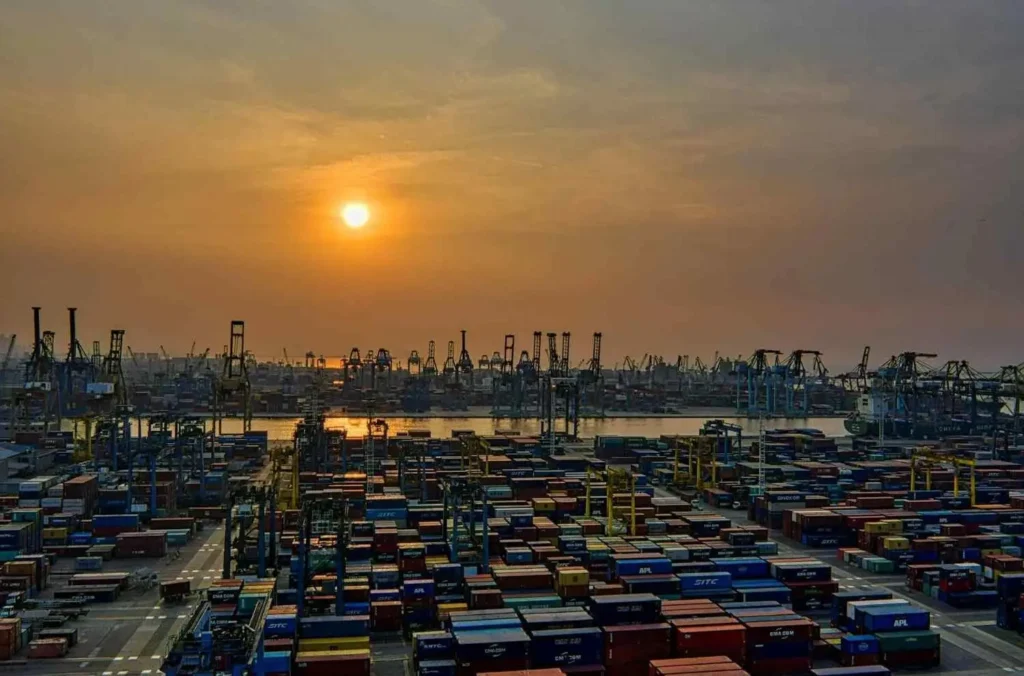
The largest shipping ports in the world are not just hubs of activity but vital arteries of global trade and economic growth. Ports like Shanghai, Singapore, and Ningbo-Zhoushan have set benchmarks for efficiency, innovation, and capacity, enabling the seamless flow of goods across continents.
Their strategic locations and advanced infrastructure ensure that global supply chains remain functional and resilient, even in the face of increasing demand and evolving challenges.
Related: 12 Supply Chain Best Practices For Global Trade In 2026

International trade between the United States and Switzerland highlights the strong economic relationship between the two nations. With its highly
Cold Nordic waters, advanced engineering, and a strong maritime economy make Norway a powerful exporter despite its size. Many of

Trade between the United States and Canada is one of the largest bilateral trading relationships in the world. Understanding what
 Optimized by Seraphinite Accelerator