IEEPA Tariff Refunds: A 2026 CAPE Filing Guide
Roughly $166 billion in IEEPA tariffs were collected from US importers between February 2025 and February 2026. The Supreme Court



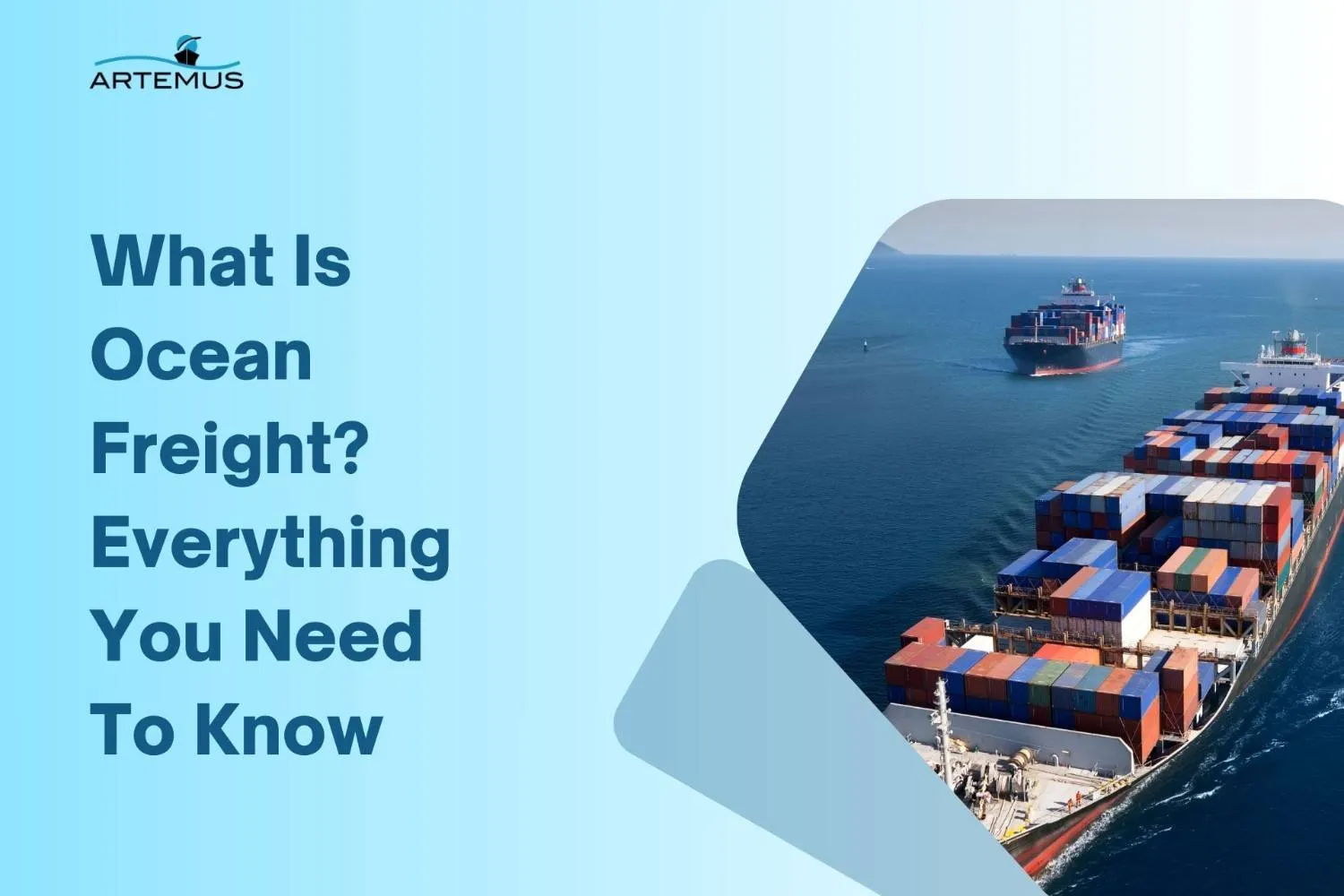
Ocean freight, a cornerstone of global trade, connects economies by facilitating the transportation of goods across vast distances. Its significance is underscored by its essential role in enabling businesses to access distant markets and deliver products worldwide.
In this blog, we explore the intricacies of ocean freight and its pivotal importance in sustaining international commerce.
Moreover, Artemus Transportation Solutions provides ISF & AMS Compliance Support for Ocean Freight, streamlining regulatory processes and ensuring smooth cargo shipments.
Table Of Contents
Ocean freight, also known as sea freight, is the transportation of goods via ships across oceans and seas. It is a fundamental component of global trade, facilitating the movement of large quantities of goods between countries and continents.
Ocean freight encompasses various methods, including full container load (FCL), less than container load (LCL), roll-on/roll-off (RoRo), and bulk shipping. The process typically involves booking space on a vessel, packaging, and containerizing goods, transporting containers to the port, loading them onto the vessel, ocean transit, unloading at the destination port, and final delivery.
Despite challenges such as longer transit times and regulatory complexities, ocean freight offers cost-effectiveness, large capacity, and extensive global reach, making it a preferred choice for businesses engaged in international trade.
Related: What Is Ocean Freight Forwarding & Its Process?
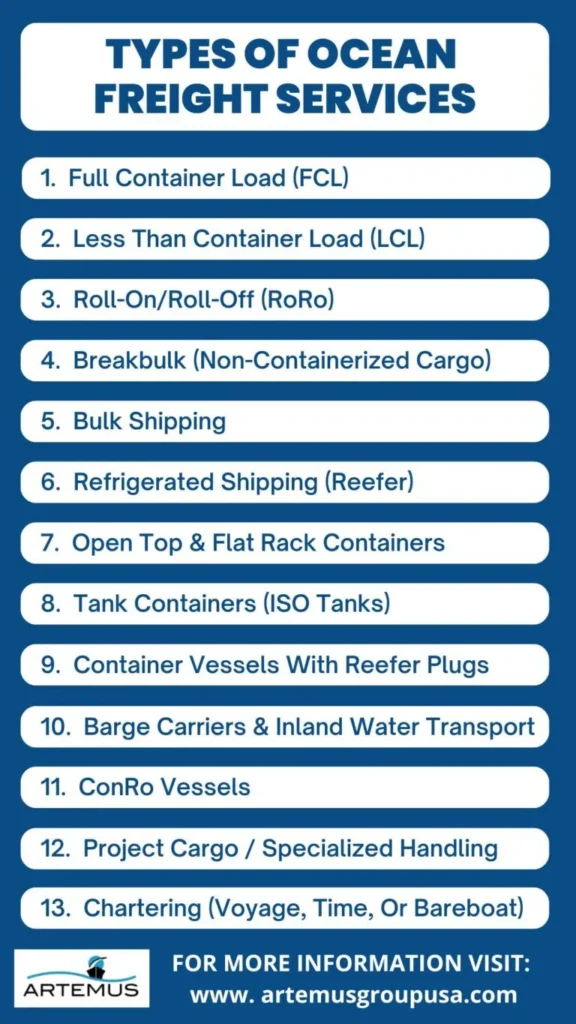
When shipping goods by sea, there isn’t just one way to move cargo. Different services are designed to handle specific types of freight, from full containers to vehicles, oversized equipment, and temperature-sensitive goods. Below are the main types of ocean freight services and what they’re best suited for.
In FCL shipping, an entire container is reserved exclusively for one shipper’s goods. Common container sizes are 20-ft, 40-ft, and 40-ft high-cube, with 45-ft options also available. FCL is often faster because the container is sealed at origin and opened only at destination, reducing handling points and damage risk.
It works best when your cargo nearly or fully fills a container or when you need exclusive use for security or contamination concerns. Typical documentation includes the commercial invoice, packing list, bill of lading, and any required certificates. Insurance is still recommended, especially for high-value or sensitive cargo.
LCL involves combining cargo from multiple shippers into one container. It’s cost-effective for small shipments, with charges based on volume or weight, but consolidation and deconsolidation can add time and handling risk.
This option makes sense for smaller or irregular shipments that don’t justify an FCL. Forwarders usually provide consolidation hubs and schedules, and customs inspections at deconsolidation may add extra time or fees.
RoRo vessels are built with ramps and decks so wheeled or rolling equipment can be driven or towed on and off the ship. This reduces crane lifts and speeds up loading, making RoRo ideal for cars, trucks, trailers, and heavy machinery.
Vehicles are lashed for sea passage and typically require pre-shipment checks such as fuel and battery levels. RoRo is cost-competitive on vehicle-heavy routes, but availability is limited compared to container services.
Breakbulk shipping covers cargo too large, heavy, or irregular to fit in containers. Items are loaded and secured individually using cranes and special lashings. It’s widely used for steel, construction machinery, and wind-turbine components.
Careful stowage plans, heavy-lift equipment, and specialized handling are essential, and insurance and permits often need to be arranged well in advance.
Bulk shipping moves unpackaged commodities such as grains, ores, coal, and crude oil in large quantities. Dry bulk carriers are classified by size (handysize, panamax, capesize), while liquid bulk uses specialized tankers.
Cargo is loaded loose into the vessel’s holds, making it efficient but requiring specific loading gear and terminal arrangements. Seasonal demand, commodity markets, and charter rates strongly influence cost and availability.
Reefers are temperature-controlled containers used for perishable and pharmaceutical goods. They typically range from -30°C to +25°C, depending on cargo. Power is supplied through vessel plugs or portable generators, and shipments are monitored with remote sensors or data loggers.
Cold chain integrity is critical, so exporters often combine reefer transport with pre-trip inspections and detailed temperature logs.
Open top containers are suited for tall cargo that must be loaded from above, while flat racks handle wide or heavy machinery that can’t fit standard containers. Both require secure lashing, specialized lifting equipment, and sometimes custom-built cradles. These options are commonly used for industrial parts, construction equipment, or oversized machinery.
ISO tanks are designed for transporting bulk liquids, chemicals, or food-grade products. Built from stainless steel and fitted into a protective frame, they meet strict safety standards. They eliminate the need for drums or barrels and are efficient for long-distance liquid transport. Proper cleaning, inspection, and compatibility checks are essential before reuse.
Many container ships are equipped with reefer plugs that allow refrigerated containers to operate throughout the voyage. Shippers with large perishable volumes often book space on high-plug vessels to ensure enough capacity. Plug availability and redundancy are important considerations, particularly for long or transshipment-heavy routes.
Barge carriers move barges loaded with containers or bulk cargo through rivers and shallow waterways, extending ocean freight into inland regions. This option is important for areas where deep-sea ports are inaccessible. It’s also considered more environmentally friendly for certain trade corridors, though transit times can be longer compared to road or rail.
ConRo ships combine container capacity on upper decks with RoRo garages below. They are useful for routes where both containerized and rolling cargo need to move together, providing flexibility and efficiency. While not as common as pure container or RoRo ships, they serve niche routes where mixed cargo is typical.
Project cargo involves oversized, heavy, or complex shipments like turbines, generators, or large construction modules. These often require custom lifting frames, detailed stowage planning, and coordination across multiple transport modes. Specialized forwarders usually handle this type of cargo, ensuring permits, surveys, and equipment are arranged well in advance.
Chartering means renting a vessel to move large consignments or bulk cargo. Voyage charters are for single trips, time charters for a fixed period, and bareboat charters transfer full control to the charterer. Each type involves different risks and responsibilities, including demurrage and off-hire clauses. Chartering is common for bulk commodities and very large shipments that don’t fit regular liner services.
Related: How Much Does It Cost To Become A Freight Broker In 2025
Understanding the terminology associated with ocean freight is essential for effectively navigating the complexities of international shipping. Here are common terms related to ocean freight:
Related: Freight Broker License Costs: The Price Of Entry In 2025
Shipping goods across the world’s oceans is a complex process involving various stages and players. Understanding the ocean freight process can help businesses and individuals navigate international trade more efficiently.
Here, we break down the key steps in the ocean freight process from start to finish.
Assessment Of Needs:
The process begins with assessing the shipment’s needs, including the type of goods, volume, weight, and destination. This step helps in determining the best shipping method and container type.
Choosing A Freight Forwarder:
A freight forwarder is often employed to manage the logistics. They act as an intermediary between the shipper and various transportation services, ensuring that all parts of the shipping process are handled smoothly.
Freight Quotation:
The shipper requests a freight quotation from the freight forwarder or directly from a carrier. This quote includes shipping costs, transit times, and any additional services required.
Booking Confirmation:
Once the quote is accepted, a booking confirmation is issued, securing space on a vessel for the shipment.
Documentation Preparation:
Essential documents such as the commercial invoice, packing list, and export declaration are prepared. These documents are crucial for customs clearance and ensuring legal compliance.
Customs Filing:
The freight forwarder or customs broker files the necessary documents with the export customs authorities. This step verifies that the goods comply with export regulations and that any duties or taxes are paid.
Inland Transportation:
The goods are transported from the shipper’s location to the port of loading. This can involve trucking, rail, or a combination of transportation modes, depending on the distance and location.
Containerization:
If the goods are being shipped in containers, they are loaded into the appropriate container type (e.g., FCL or LCL). Proper packing and securing of the cargo are essential to prevent damage during transit.
Arrival At Port:
The container or cargo arrives at the port of loading. Here, it undergoes inspection and documentation checks by port authorities.
Loading Process:
The cargo is loaded onto the designated vessel. The loading process is meticulously planned to ensure efficient use of space and safe transportation.
Vessel Departure:
The vessel departs the port of loading and begins its journey across the ocean. Transit times can vary significantly based on the route and distance.
Monitoring Shipment:
During transit, the freight forwarder monitors the shipment, providing updates on its progress and estimated time of arrival.
Port Procedures:
Upon arrival at the port of discharge, the cargo undergoes unloading procedures. Port authorities inspect the shipment and verify documentation.
Import Customs Clearance:
The freight forwarder or customs broker handles the import customs clearance. This involves filing import documentation, paying duties and taxes, and ensuring the cargo complies with local regulations.
Inland Transport:
After customs clearance, the cargo is transported from the port of discharge to its final destination. This may involve trucking, rail, or intermodal transportation.
Delivery:
The cargo is delivered to the consignee’s location. Upon receipt, the consignee inspects the goods to ensure they have arrived in good condition and as per the agreement.
Final Documentation:
The shipper and consignee review and finalize all related documentation, including the bill of lading, commercial invoice, and any inspection reports.
Payment Settlement:
The final step involves settling payments with all parties involved, including the freight forwarder, carrier, and customs brokers.
Related: How To Import A Car To The United States? 2024 Regulations
BAF, or Bunker Adjustment Factor, is a surcharge applied to ocean freight shipments to account for fluctuations in fuel prices. As fuel costs represent a significant portion of operating expenses for shipping lines, BAF is used to offset the impact of rising or falling fuel prices on shipping rates.
BAF charges are typically calculated as a percentage of the base ocean freight rate and are adjusted periodically based on changes in fuel prices.
While BAF helps shipping lines manage fuel-related costs, it can also introduce volatility and uncertainty into shipping rates, as fuel prices are subject to market fluctuations. Consequently, shippers should closely monitor BAF adjustments and factor them into their transportation budgeting and planning processes.
GRI, or General Rate Increase, refers to an adjustment made by ocean carriers to increase the base rates for transporting cargo. This increase is typically implemented across various shipping routes and is applied uniformly to all customers.
Carriers commonly use GRI to offset rising operating costs, such as fuel prices, labor expenses, and infrastructure investments.
Unlike other surcharges that are applied selectively based on specific factors, GRI affects all shipments within a specified timeframe, regardless of the cargo type or shipping conditions.
Shippers should be aware of GRI announcements and factor these increases into their transportation budgets and negotiations with carriers to avoid unexpected cost escalations in their supply chain operations.
Related: Top 10 Items Exported From India To The USA
Calculating ocean freight charges for containers can be complex, but understanding the key components and how they contribute to the total cost can help businesses budget more effectively.
Here’s a step-by-step guide to calculating ocean freight charges for containers coming to the USA, along with some approximate figures to provide context.
Full Container Load (FCL) vs. Less than Container Load (LCL):
The basic freight rate is the core cost of transporting the container from the origin port to the destination port. Several factors influence this rate:
Approximate Rates:
Approximate Surcharges & Fees:
Once the container arrives at a US port, it often needs to be transported to its final destination. This involves:
Trucking or Rail Costs: Vary based on the distance from the port to the consignee’s location.
Approximate Costs:
Approximate Fees
Cargo Insurance: Optional but recommended to cover potential loss or damage during transit. Typically costs 0.3% – 0.5% of the cargo’s value.
Approximate Cost:
$300 – $500 for every $100,000 of cargo value
Approximate Fees:
Related: Poland’s Exports To USA: The Complete List For Opportunities
Ocean freight remains one of the most popular methods of moving goods internationally because it combines affordability, capacity, and reliability. For businesses involved in global trade, shipping by sea offers a range of advantages that go beyond just cost savings.
One of the strongest benefits of ocean freight is its competitive pricing. Compared to air freight, shipping by sea is often four to six times more affordable, especially for heavy or high-volume cargo.
The ability to spread costs across large quantities of goods makes it an attractive option for companies that want to reduce logistics expenses while keeping margins healthy.
Cargo ships are built to carry massive loads, making them ideal for industries that deal with raw materials, machinery, vehicles, or consumer products. Beyond large volumes, sea freight can also accommodate a wide variety of cargo types, from dry bulk and liquids to oversized or even temperature-sensitive goods in refrigerated containers.
This flexibility gives businesses the ability to ship almost anything efficiently.
Ocean freight is governed by strict international regulations, which ensures high safety standards. Containers are sealed and well protected, reducing the risks of theft, damage, or weather exposure.
Modern vessels are equipped with advanced navigation and communication systems, which improve safety and allow shipping companies to maintain predictable schedules.
Certain types of freight, such as industrial equipment, large vehicles, or construction materials, are simply not practical to move by air. Ocean freight is uniquely suited for oversized or heavy shipments, providing the specialized handling and capacity required to move these loads across long distances.
While ships consume significant amounts of fuel, they are far more efficient when transporting cargo in bulk compared to trucks or planes. Ocean freight produces fewer emissions per ton-mile, making it a greener option.
The shipping industry is also investing in sustainability initiatives, including cleaner fuels, fuel-efficient vessel designs, and alternative energy sources like wind and solar.
Shipping routes connect nearly every continent, giving businesses access to suppliers and customers worldwide. Major ports act as international hubs, making ocean freight a cornerstone of global trade.
Combined with intermodal options like rail and trucking, sea freight ensures a seamless flow of goods from origin to destination.
Related: How To Import From China To USA In 2024: Process & Costs
While ocean freight is one of the most cost-effective ways to move goods globally, it faces several challenges that can impact both carriers and shippers. From supply chain disruptions to workforce shortages, these issues create delays, increase costs, and add uncertainty to global trade.
A major challenge that surfaced during the pandemic was the lack of available containers. Many were left idle at ports or in the wrong locations after manufacturers scaled down operations. This imbalance reduced shipping capacity and made it difficult for businesses to secure containers when demand started to rebound.
With fewer containers and increased demand, freight rates surged dramatically. On some major trade routes, costs rose by more than 300%. For lower-value goods like apparel, household items, or promotional products, the share of shipping costs compared to overall sourcing expenses jumped from single digits to more than 20%.
This sudden rise has squeezed margins for many importers and exporters.
Another persistent issue is congestion at major ports. Ships often face long wait times to unload or load due to limited port capacity. Containers stuck in the wrong places further slow down operations, creating a domino effect of delays. These bottlenecks lead to wasted time, increased storage fees, and disrupted supply chains.
Even when containers and ports are available, carrier capacity can still be an obstacle. Overbooked vessels often result in rolled cargo, where shipments are pushed to later sailings. Blank sailings and port skipping are also common, which undermines the reliability businesses expect from ocean freight services.
The shipping industry is also dealing with a lack of qualified personnel. As experienced seafarers retire, fewer younger professionals are entering the field. This shortage of skilled crew makes it harder to keep up with global shipping demand and contributes to operational stress.
These challenges reflect the complexity of global logistics. Factors such as supply and demand fluctuations, geopolitical events, and labor shortages all put pressure on ocean freight operations. While long-term solutions may involve greater investment in port infrastructure, vessel capacity, and technology, shippers need to stay flexible and plan ahead to manage risks effectively.
Related: List Of 12 Largest Shipping Ports In The World
Ocean shipping routes form the framework of international logistics, allowing goods to move smoothly across continents. They not only carry the majority of the world’s trade but also shape how economies interact and grow.
Nearly every country relies on sea routes to import or export goods. These shipping lanes connect major ports across the globe, giving businesses access to distant markets and suppliers. For companies, this network means the ability to expand internationally, source raw materials from multiple regions, and reach customers worldwide.
Ocean routes make large-scale shipping possible. By transporting vast amounts of cargo on each journey, vessels lower the average cost per unit. This efficiency benefits both businesses and consumers by keeping international shipping more affordable compared to other modes of transport.
Shipping routes don’t operate in isolation. They connect seamlessly with road, rail, and even air networks, creating intermodal transport solutions. This integration ensures that goods can move from factories to warehouses to end customers in a streamlined, cost-effective manner.
Many global ports serve as hubs along these routes, supporting regional and international commerce. For example, ports in Singapore, Rotterdam, and Los Angeles act as gateways, handling massive cargo volumes and redistributing goods across local markets. Their presence strengthens supply chain resilience and trade efficiency.
Predictable routes and schedules give businesses the reliability needed to manage production and inventory. Even though disruptions such as weather, strikes, or political conflicts can occur, established shipping lanes help stabilize global supply chains and provide alternative options when needed.
Related: Top 10 Ports In The USA: The Busiest Hubs Driving US Trade
Artemus Transportation Solutions offers comprehensive ISF (Importer Security Filing) and MS (Manifest Submission) compliance support for ocean freight, ensuring that all necessary documentation and filings are accurately completed and submitted in a timely manner.
The expert team navigates the complex regulations set by U.S. Customs and Border Protection, mitigating risks of penalties and delays. By leveraging advanced technology and industry expertise, Artemus Transportation Solutions streamlines the compliance process, providing peace of mind and operational efficiency for shippers and importers.
Related: Exporting Mangoes From India To The USA: How To Ship?
Ocean freight refers to the transportation of goods via sea vessels across oceans and seas.
Ocean freight charges refer to the costs associated with transporting goods via sea vessels, including base rates, surcharges, and additional fees.
The shipper or consignee typically pays for ocean freight, depending on the agreed-upon terms of sale (Incoterms) in the contract.
A bottleneck is any point in the supply chain that slows down cargo movement, such as congested ports or limited container availability. It leads to delays and can increase overall shipping costs.
Sea freight is ideal for large, heavy, or bulk shipments that are not time-sensitive and when cost efficiency is a priority. It is also suitable for international trade where air freight would be prohibitively expensive.
Common Incoterms for sea shipments include FOB (Free on Board), CFR (Cost and Freight), CIF (Cost, Insurance, and Freight), and FAS (Free Alongside Ship). These terms define responsibilities for costs, risks, and delivery between buyers and sellers.
Shipping costs are generally higher to remote or less-accessible countries due to longer distances, limited port infrastructure, and lower shipping frequency. Examples often include small island nations or landlocked countries with complex logistics.
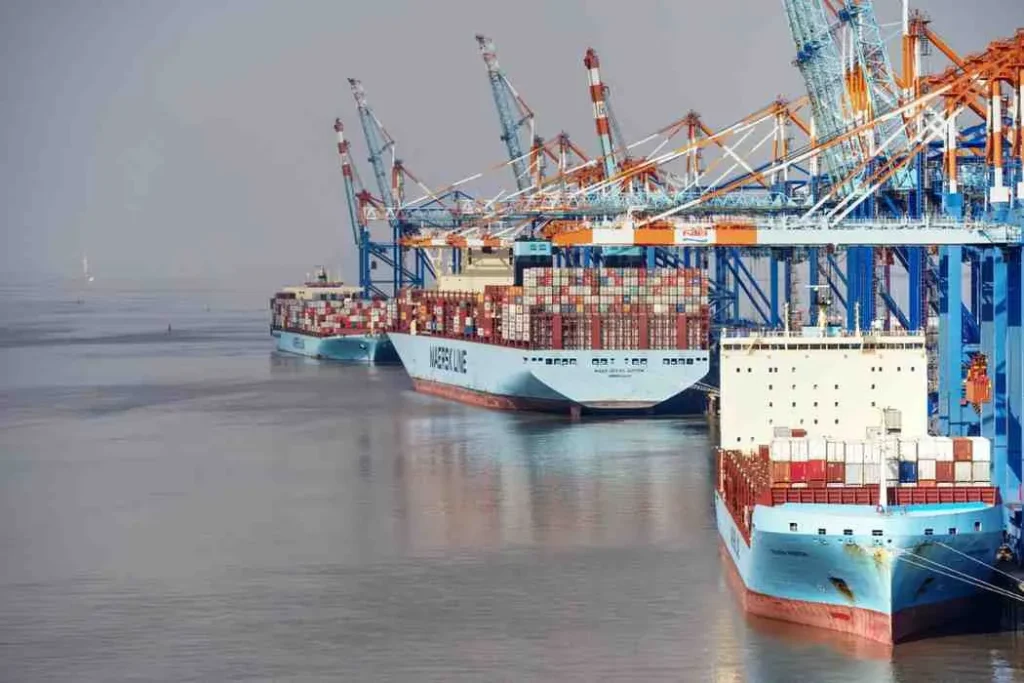
Navigating the complexities of ocean freight is essential for businesses involved in international trade. From planning and booking to customs clearance and final delivery, each step requires careful coordination and compliance with regulations.
By understanding the intricacies of the ocean freight process, businesses can optimize their shipping strategies, reduce costs, and ensure the timely delivery of goods.

Roughly $166 billion in IEEPA tariffs were collected from US importers between February 2025 and February 2026. The Supreme Court

The United Kingdom is one of the world’s largest trading economies and a top exporter of services. Cars, machinery, pharmaceuticals,
Mexico became the United States’ number-one trading partner in 2024, surpassing both Canada and China. According to the Office of
 Optimized by Seraphinite Accelerator